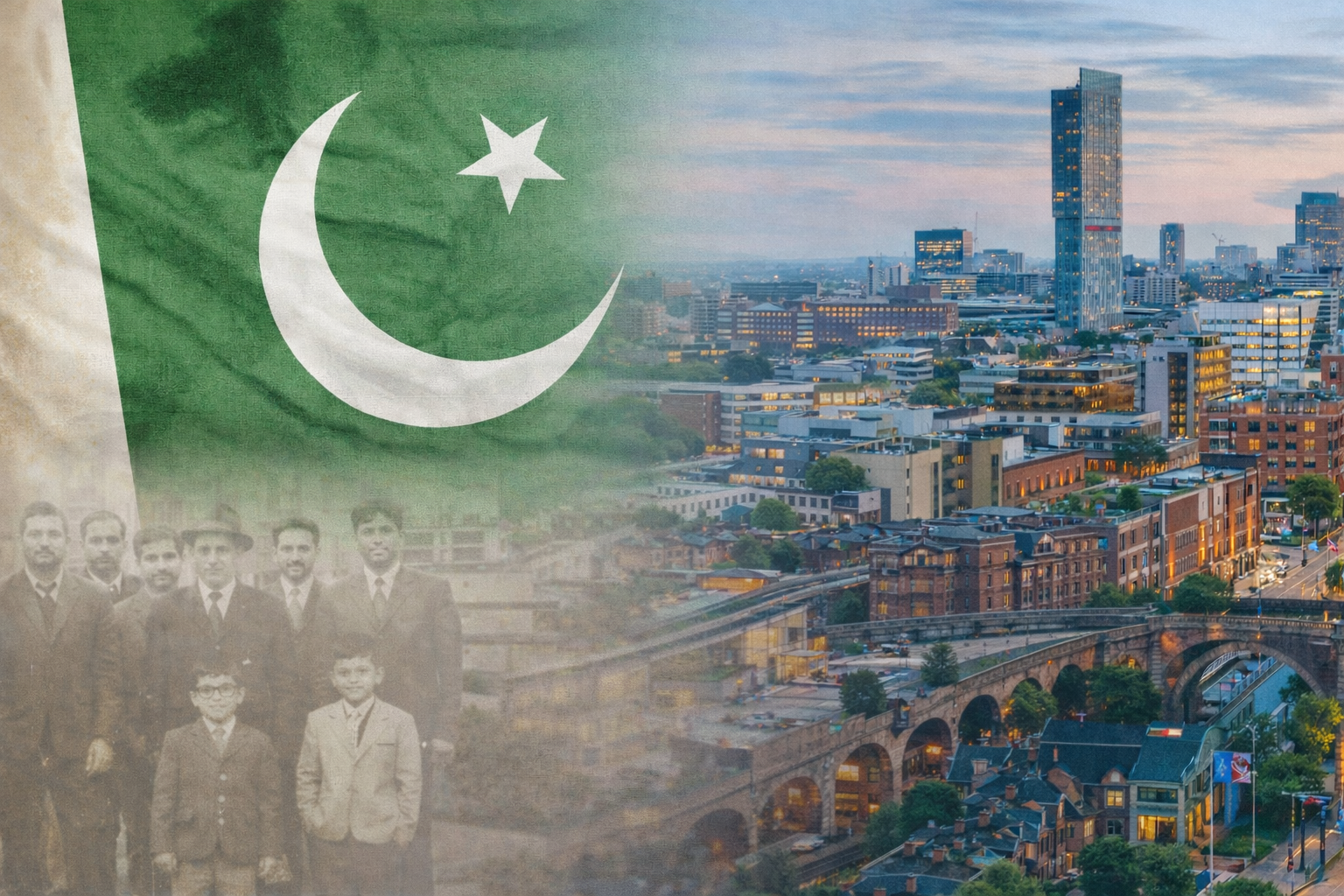
Migration stories often reflect resilience, opportunity, and the search for a better future. Many families who moved to the United Kingdom during the 1960s played a significant role in shaping the multicultural society that exists today. One such journey began when a young boy arrived in the UK from Pakistan in the mid-1960s, eventually building a life in Manchester and developing a deep connection with the city he would call home.
Arrival in the United Kingdom
The journey to the United Kingdom began in 1966 when he was around fifteen years old. However, the story started a few years earlier with his father, who had already traveled to the UK in search of new opportunities.
Before settling in Britain, his father served with the British Army in India. Later, he continued his service with the army in Cyprus. After completing his military service, he decided to move to Manchester in 1962. This decision marked the beginning of a new chapter for the entire family.
Family Reunited in Manchester
Once his father established himself in Manchester, he invited the rest of the family to join him in the United Kingdom. In 1966, the young teenager arrived in Manchester along with other members of his family, beginning a new life far away from their country of birth.
Moving to a new country at such a young age can be challenging. It involves adapting to a new culture, learning new systems, and building connections in an unfamiliar environment. Despite these challenges, Manchester gradually became home for the family.
A Life Built in Manchester
Since arriving in 1966, he has spent nearly six decades living in Manchester. Over the years, the city has become an integral part of his identity. Spending most of his life in the UK has shaped his sense of belonging and connection to the community around him.
Today, he describes himself as a British Pakistani Mancunian. While he was born in Pakistan and still holds strong emotional ties to his birthplace, the majority of his life experiences have been shaped by his time in Manchester. This blend of identities reflects the reality of many immigrants who maintain connections to their heritage while fully embracing the country they now call home.
Identity and Cultural Belonging
For many migrants, identity becomes a combination of heritage and lived experience. Being both British and Pakistani represents not a conflict but a rich cultural balance. The long years spent in Manchester have strengthened his connection to British society while still honoring his Pakistani roots.
Stories like this highlight how migration contributes to the cultural diversity that enriches modern societies. They also demonstrate how individuals can develop strong bonds with the places where they live, work, and build their lives.
Conclusion
The journey from Pakistan to Manchester in the 1960s represents more than just relocation. It symbolizes determination, adaptation, and the blending of cultures. After nearly six decades in Manchester, the city has become a defining part of his identity, illustrating how migration can shape both personal stories and entire communities.